

Mãi Chess set with Chi-An De Leo
2026.05.09 10 mins to readFrom the beginning, Mãi has existed to ask a simple question: What if waste could become something worth keeping?
We’ve reimagined discarded plastic as furniture, tangrams, tumbling towers, and cubes. Yet chess posed a new frontier: a ritual of strategy played across sixty-four squares—and a perfect test of Mãi’s mission.
When you sit at a chessboard, you’re not just moving pieces—you’re entering a conversation: with your opponent, with yourself, with centuries of players who came before.
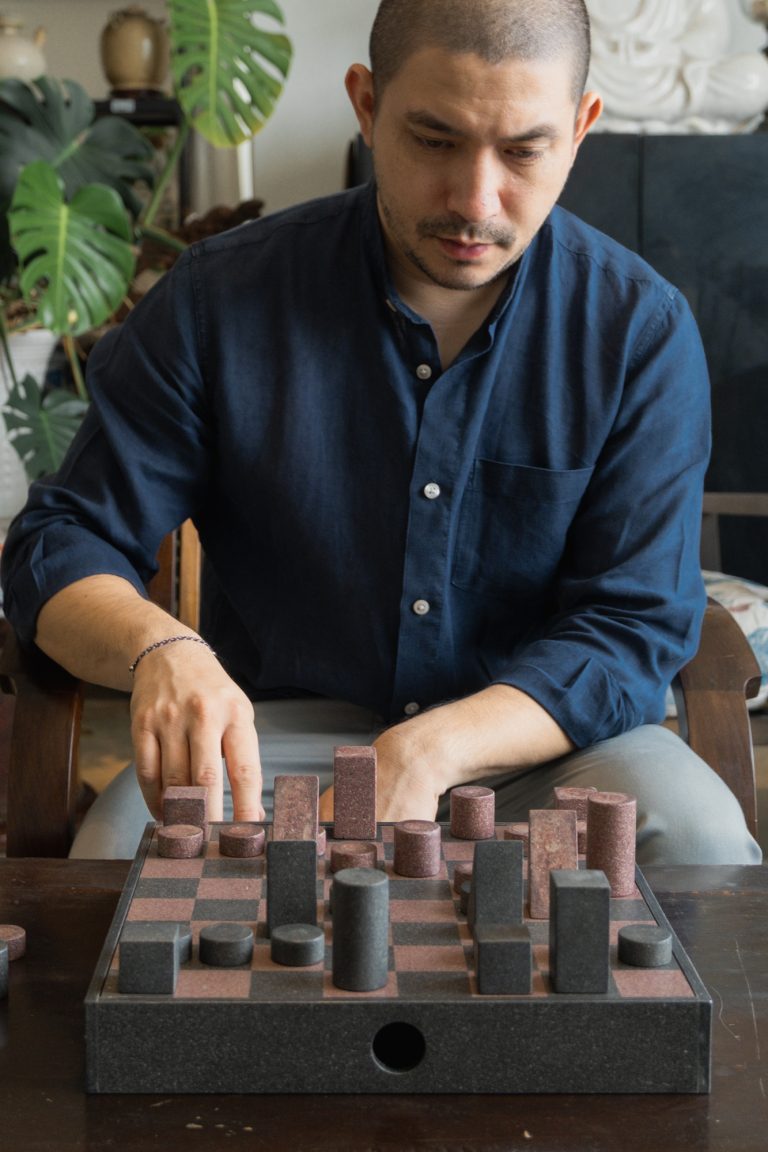
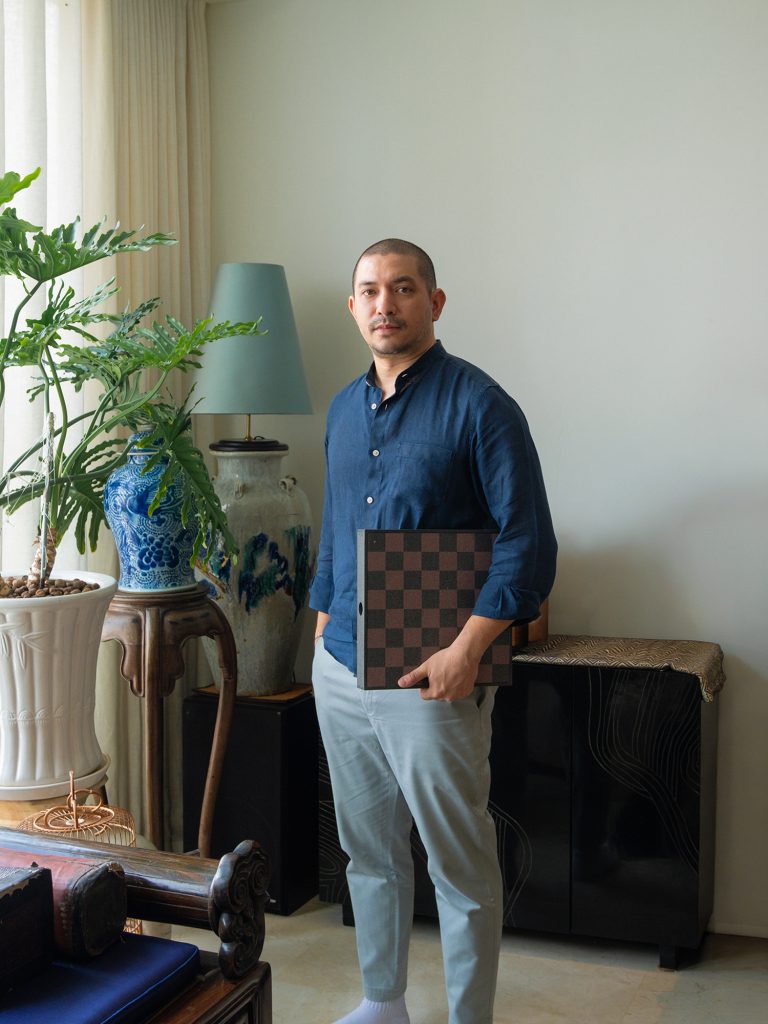
Under the banner of our new Mãi Collaboration Program, Chi-An De Leo, co-founder of Rice and CEO of BaseSGN, joined us to bring this vision to life.
We sat down with Chi-An to uncover how a lifelong passion for chess, a commitment to sustainable craft, and a fascination with pure geometry converged in the making of Mãi Chess.
—What sparked your interest in collaborating with Mãi?
The idea of transforming waste into something that brings people together through play felt like the perfect opportunity to stop procrastinating and design the chess set I'd been contemplating for years.
—What was your first impression of Mãi Chess—before it became yours?
The challenge intrigued me most. Chess has centuries of design tradition, and reimagining it through sustainability was exciting.
—How did the invitation to reimagine a game make you feel?
Games carry deep personal meaning — childhood memories, family traditions and cultural significance. Creating something that could become part of someone's personal ritual or family tradition was exciting.
—How did you approach “strategy” as a visual or emotional concept?
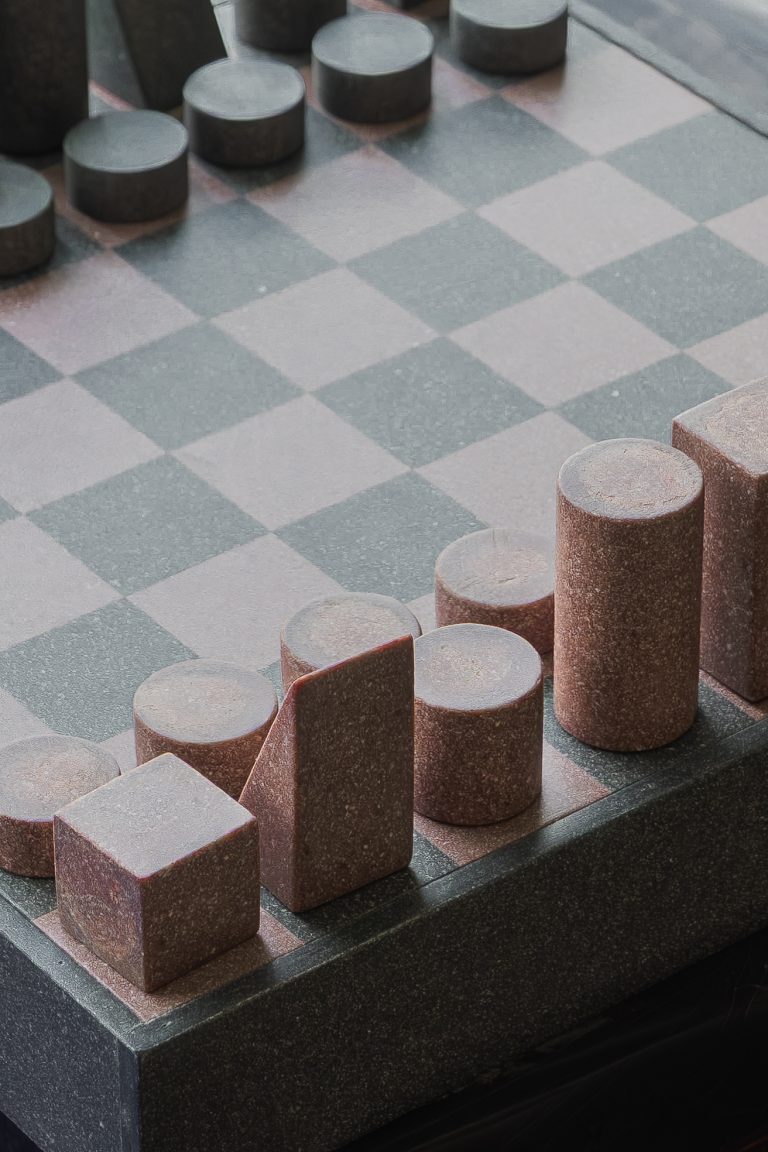
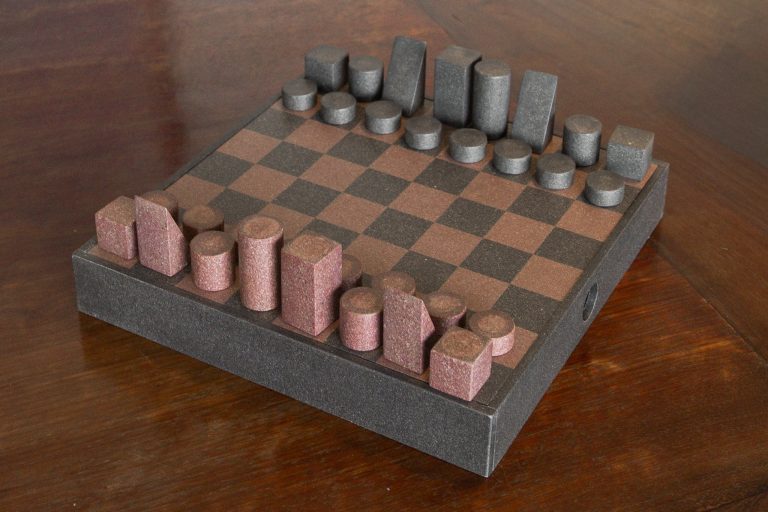
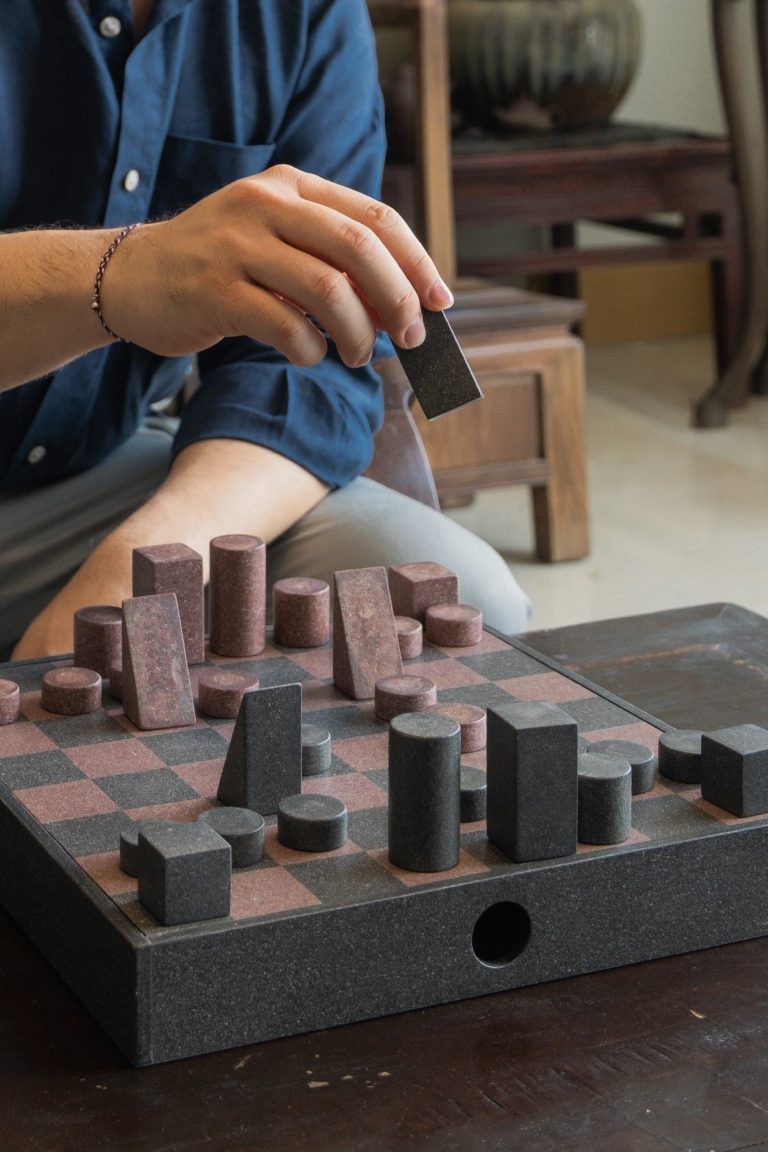
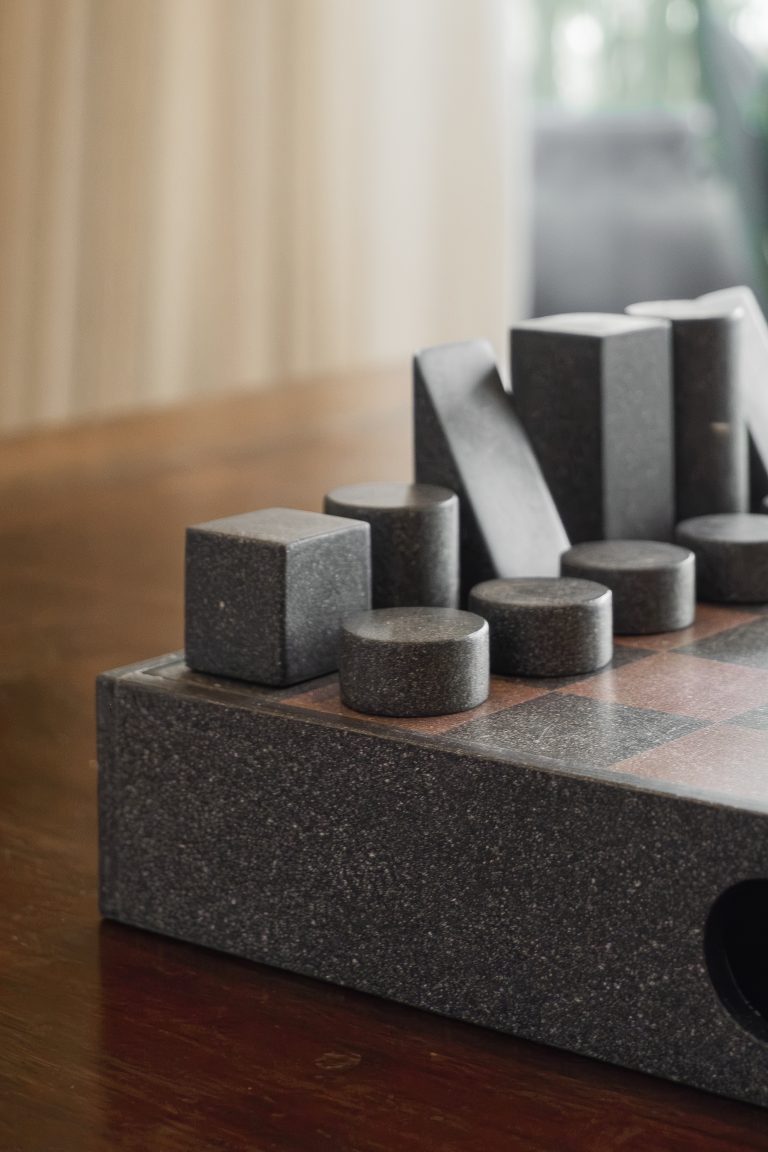
In chess, every move matters, every piece has a specific role. I approached the design of each piece with the same mindset. Each piece needed to communicate its role instantly in the simplest way.
—Were there particular design decisions that felt like personal statements? How does designing something interactive—like a game—differ from your usual creative process?
The decision to embrace pure geometric forms. It reflects a belief that good design should be timeless and universal, transcending cultural boundaries. Growing up multicultural taught me that the most powerful communication happens through shared visual languages—geometry being one of the most universal.
—Did the limitations of the materials challenge or transform your design philosophy?
The material constraints were liberating, actually. We often talk about how limitations breed creativity, and this project proved that beautifully. Working exclusively with what was available forced me to think about form in its purest sense.
—Was there any part of the set that took the longest to get “right?” Why?
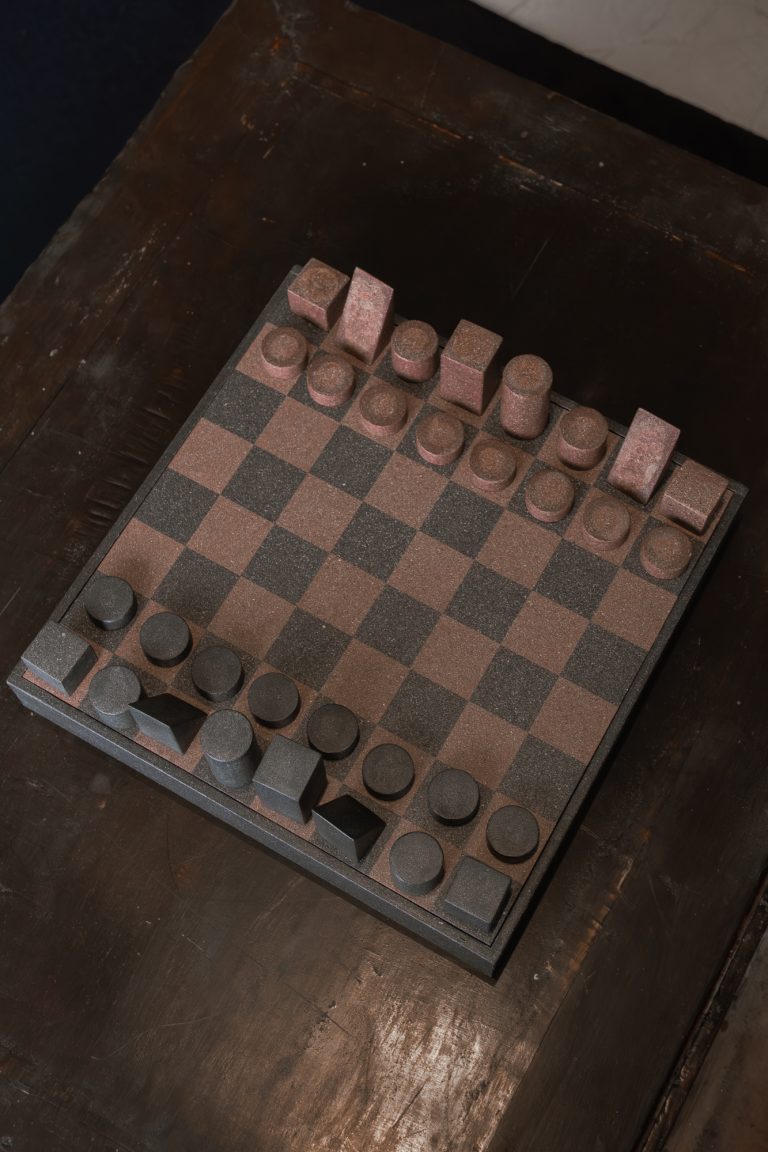
Not really, I designed each piece always with the full set in mind, that's also how chess is played—you know exactly where each piece is on the board at all times.
—What did you enjoy most throughout the design process?
There's a great feeling of satisfaction when you find the solution for the full set as a whole in the simplest way possible.
—Were you thinking more about the people who would play with this—or those who would simply observe it?
Both, but if I can convert an observer to pick up the set and play that would be the ultimate.
—How do you support sustainability through design?
By designing objects that people will want to keep, repair, and pass down. This chess set is designed to become more meaningful over time. The pieces will develop character through use and the board will accumulate the history of games played.
—If someone were to pick up this chess set without knowing you made it, or someone plays this set years from now, what do you hope they feel?
I just hope they enjoy playing the game and can be proud to display the set in their living room.
With Mãi Chess now complete, the next question returns us to our founding spark: How else can we turn waste into something worth keeping? That’s the heart of the Mãi Collaboration Program—an open call for designers, artists, and makers to transform upcycled plastic into objects that matter. Mãi provides the material, the craft support, and the platform; collaborators supply the vision. The board is set. The next move is yours. For those thinking of joining the Mãi Collaboration Program, Chí-An’s advice was simple.
—What would you say to another artist considering joining the Mãi Collaboration Program?
Have fun!